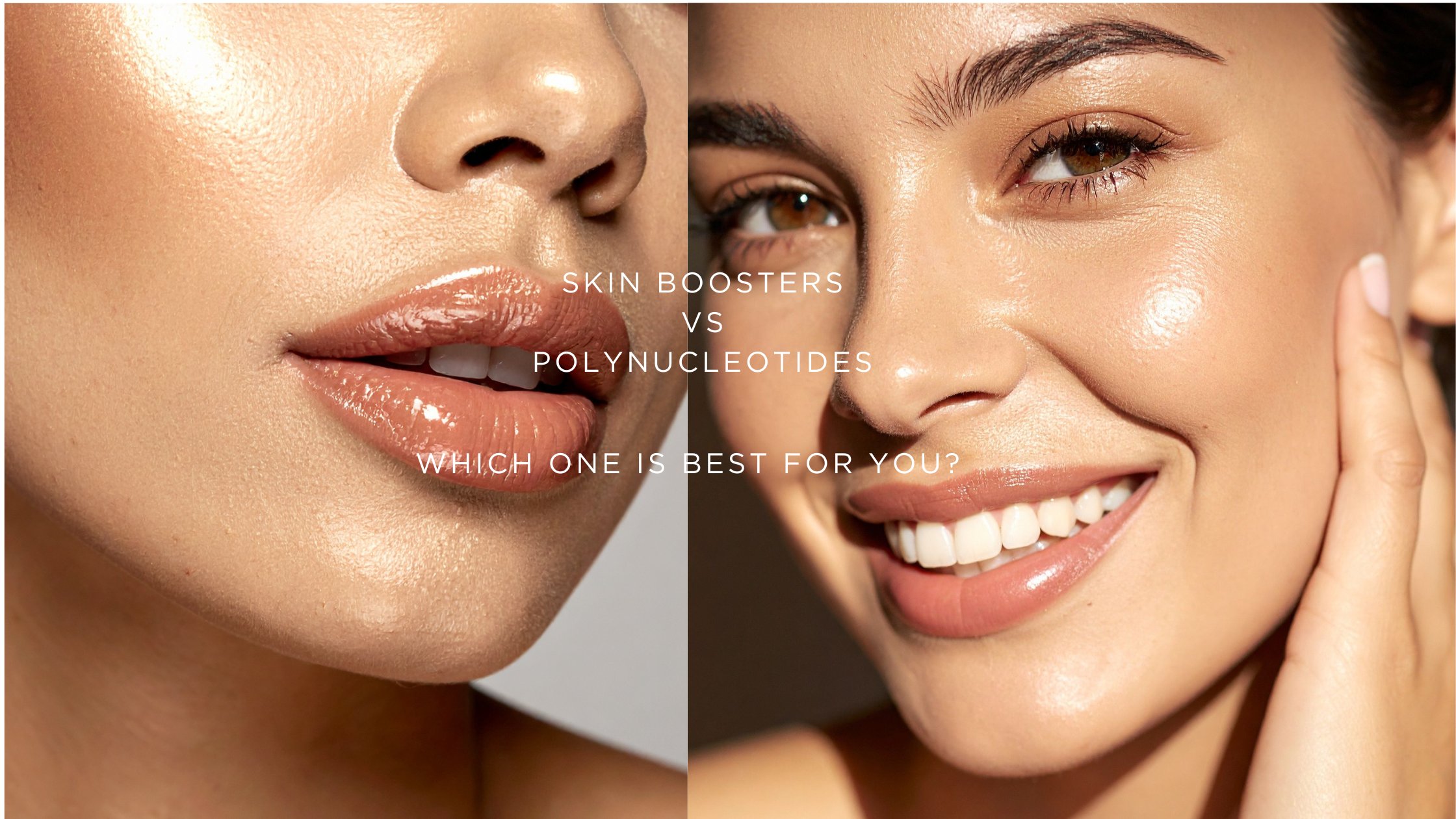
Skin Boosters vs Polynucleotides: Which Is Best for Your Skin?
If you've been researching aesthetic treatments to improve your skin, you've probably come across the terms skin boosters and polynucleotides.
But what's the difference? And more importantly, which one is right for your skin? The truth is, there isn't one treatment that is "best" for everyone. Skin boosters and polynucleotides work in different ways, and the right choice depends on your skin, your concerns and the results you're hoping to achieve.
Let's take a closer look.
What is a skin booster?
Skin boosters are injectable treatments designed to improve the overall quality and hydration of the skin. Unlike traditional dermal fillers, which are used to restore or enhance volume and shape, skin boosters are generally injected more superficially to improve skin hydration and texture. One of the most well-known treatments is Profhilo, which contains a high concentration of hyaluronic acid. Hyaluronic acid is naturally found in the body and has the ability to attract and retain water. As we age, our skin's natural levels of hyaluronic acid, collagen and elastin decline, which can contribute to dryness, fine lines and a loss of that fresh, hydrated appearance.
Skin boosters can help improve:
- Skin hydration
- Skin smoothness
- Fine lines
- Skin texture
- Overall radiance
- The appearance of tired, dehydrated skin
Think of a skin booster as a treatment that helps your skin look healthier, fresher and more hydrated.
What are polynucleotides?
Polynucleotides are a newer generation of regenerative aesthetic treatments that have become increasingly popular for improving skin quality. Rather than simply focusing on hydration, polynucleotides are designed to support the skin's natural regenerative processes. They are particularly popular for areas where the skin is thinner and more delicate, including the under-eye area.
Polynucleotides may be considered for concerns such as:
- Fine lines
- Crepey skin
- Reduced skin elasticity
- Dull or tired-looking skin
- Loss of skin quality
- Delicate under-eye skin
The aim is to encourage healthier-looking skin over time rather than simply creating an immediate volumising effect.
So, what's the difference?
The simplest way to think about it is:
Skin boosters = hydration and improved skin quality
Polynucleotides = regenerative support and improved skin quality
Of course, the reality is more nuanced than this, and there is some overlap between the benefits of the two. Your skin may benefit from one, the other, or in some cases, a carefully planned combination of treatments.
Which one is right for me?
This depends entirely on what your skin needs. If your main concern is dehydrated, dull or lacklustre skin, a skin booster may be a good option. If you're concerned about fine lines, crepey texture, reduced elasticity or delicate skin, polynucleotides may be worth considering.
If you're experiencing several concerns at once, we can look at your skin as a whole and create a treatment plan that makes sense for you. This is why I don't believe in a "one treatment fits all" approach. At XploreU Aesthetics, I prefer to assess your skin, listen to what you'd like to improve and then recommend the treatment, or combination of treatments that I believe will give you the most appropriate and natural-looking result.
The bottom line
Neither skin boosters nor polynucleotides are necessarily "better" than the other. They are different treatments designed to address different aspects of skin quality. The best treatment for you is the one that matches your skin, your concerns and your goals.
If you're unsure which treatment would be right for you, a consultation is the best place to start. Book Now